Une vieille légende hindoue raconte qu’il y eût un temps où tous les hommes étaient des dieux. Mais ils abusèrent tellement de leur divinité que Brahma décida de leur ôter le pouvoir divin et de le cacher à un endroit où il leur serait impossible de le retrouver. Le grand problème fut donc de lui trouver une cachette.
Lorsque les dieux furent convoqués à un conseil pour résoudre ce problème, ils proposèrent ceci: “Enterrons la divinité de l’homme dans la terre.”
Mais Brahma répondit: “Non, cela ne suffit pas, car l’homme creusera et la trouvera.”
Alors les dieux dirent: “Dans ce cas, jetons la divinité dans le plus profond des océans.”
Mais Brahma répondit à nouveau: “Non, car tôt ou tard, l’homme explorera les profondeurs de tous les océans, et il est certain qu’un jour, il la trouvera et la remontera à la surface.”
Déconcertés, les dieux proposèrent: “Il ne reste plus que le ciel, oui, cachons la divinité de l’homme sur la Lune.”
Mais, Brahma répondit encore: “Non, un jour, l’homme parcourra le ciel, ira sur la Lune et la trouvera.”
Les dieux conclurent: “Nous ne savons pas où la cacher car il ne semble pas exister sur terre ou dans la mer d’endroit que l’homme ne puisse atteindre un jour.”
Alors Brahma dit: “Voici ce que nous ferons de la divinité de l’homme: nous la cacherons au plus profond de lui-même, car c’est le seul endroit où il ne pensera jamais à chercher.”
Depuis ce temps-là, conclut la légende, l’homme a fait le tour de la terre, il a exploré, escaladé, plongé et creusé, exploré la lune et le ciel à la recherche de quelque chose qui se trouve en lui…
Auteur inconnu
Posted inUncategorized|Comments Off on Sagesse hindoue
A king was coming out of his palace for his morning walk when he met a beggar. He asked the beggar,
“What do you want?” The beggar laughed and said,
“You are asking me as though you can fulfill my desire!”
The king was offended. He said,
“Of course I can fulfill your desire. What is it? Just tell me.”
And the beggar said, “ Okay if you insist but on one condition..so think twice before you promise anything.”
The emperor had seen many beggars – but beggars with conditions?
And this beggar was really strange, a very powerful man. He was a Sufi Mystic. He had charm, a charisma, his personality had an aura. Even the king felt a little jealous. And conditions?
The emperor said, ” What do you mean? What is your condition?”
The beggar said, “It is a very simple one. You see this begging bowl? I accept only if you can absolutely fill my begging bowl.”
It was a small begging bowl. The king said, “Of course. What do you think I am? I cannot fill this dirty small begging bowl?”
The beggar said, “It is better to tell you before, because later you can get into trouble. If you think you can fill it, then come, start filling.”
The king called his vizier and told him to fill it with precious stones, with diamonds, rubies and emeralds. Let this beggar know with whom he is talking. But then came the difficulty. The bowl was filled, but the king was surprised- as the stones fell into it, they would disappear. It was filled many times and each time it was again empty.
Now he was in a great rage, but told the vizier, “Even if the whole kingdom goes, if my all treasuries are emptied, let it be- but I cannot allow this beggar to defeat me.”
And all the treasures, it is said, disappeared. By and by the king became a beggar. It took months. And the beggar was there, the king was there and the whole capital was there and everybody was wondering what was going to happen, what would happen in the end.
Everything was simply disappearing. Finally the king had to fall at the feet of the beggar and he said, ” Forgive me, but before you leave just tell me one thing. What is the secret of this begging bowl? All has disappeared in it “
The beggar started laughing. He said, “It is made of human ego, everything disappears in it, nothing ever fulfills it.”
Posted inUncategorized|Comments Off on The begging bowl
” Bêtise de la tristesse : elle ne signale que ce qui nous manque. Doigt pointé sur l’absence, elle montre ce qui n’est plus. Une obsédée du néant. Intelligence de la joie : elle nous désigne ce qui est. Les yeux ouverts, elle s’étonne d’être et d’avoir ce qu’elle a. Une émerveillée. Pour la tristesse, le monde est vide ; pour la joie, il est plein. Tristesse, une sale gosse qui dénigre. Joie, une fillette qui admire. Tristesse, la grimace qui nie. Joie, le sourire qui célèbre.”
( Journal d’un amour perdu – Éric-Emmanuel Schmitt )
Posted inUncategorized|Comments Off on Intelligence de la Joie (E-E Schmitt)
Ne vous laissez pas abuser.Souvenez-vous de vous méfier.Et même de l’évidence :elle passe son temps à changer. Ne mettez trop haut ni les gens ni les choses.Ne les mettez pas trop bas.Non, ne les mettez pas trop bas. Montez. Renoncez à la haine : elle fait plus de mal à ceuxqui l’éprouvent qu’à ceux qui en sont l’objet.Ne cherchez pas à être sage à tout prix.La folie aussi est une sagesse.Et la sagesse, une folie. Fuyez les préceptes et les donneurs de leçons.Jetez ce livre. Faites ce que vous voulez.Et ce que vous pouvez.Pleurez quand il le faut. Riez. J’ai beaucoup ri.J’ai ri du monde et des autres et de moi.Rien n’est très important. Tout est tragique.Tout ce que nous aimons mourra.Et je mourrai moi aussi. La vie est belle.
Jean d’Ormesson
Posted inUncategorized|Comments Off on La vie est belle
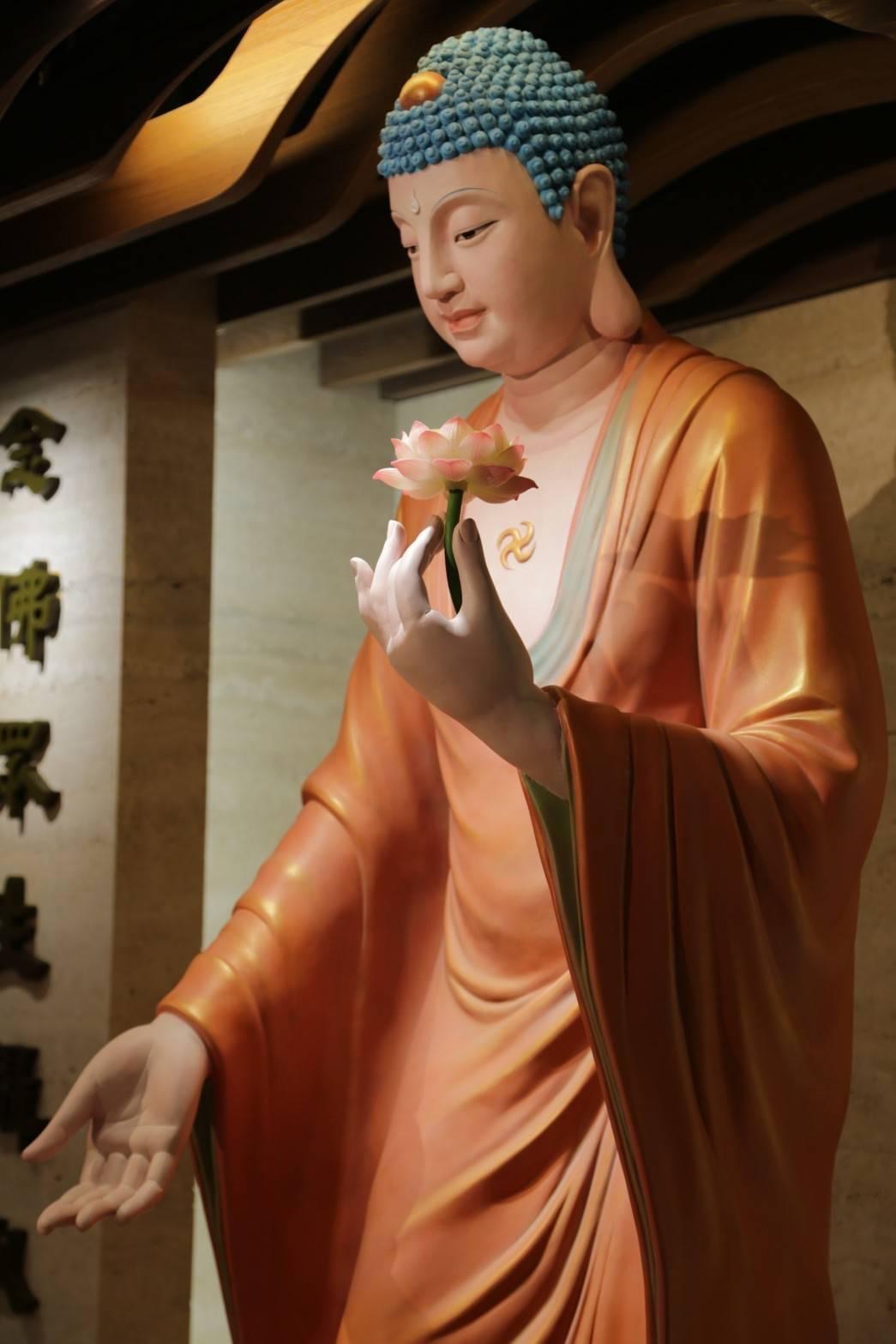
I have been reciting Amitabha Buddha since I was young, But I had no idea what kind of Buddha Amitabha is.
Not until I extensively researched Master Shandao’s writings, Did I finally understand that Amitabha Buddha is our ultimate salvation.
Amitabha is a deliverance Buddha, His compassionate deliverance is partial to sentient beings suffering deeply in samsara;
Even if one encounters Amitabha Buddha only near death, he will be reborn in the Land of Ultimate Bliss, for Amitabha’s deliverance is equal and unconditional.
Amitabha is our savior, whose deliverance is unconditional.
Whoever recites his name will be embraced in his light, never forsaken.
Amitabha Buddha’s compassionate aspiration is most profound, He vows to liberate all the sentient beings of the ten directions.
As long as we recite Amitabha Buddha, we will be reborn in the Land of Nirvana.
I have been through the cycle of birth and death for countless kalpas, treading water with nothing to grasp on to;
Now that I have been born a human and have heard the wonderful Dharma, I vow to recite Amitabha Buddha’s name and aspire to be reborn in his Pure Land.
(Translated and edited by the Pure Land School Translation Team)
▫️ ▫️ ▫️ ▫️ ▫️ ▫️ ▫️ ▫️ ▫️ ▫️
🏡Pure Land Buddhism http://www.purelandbuddhism.org/
Posted inUncategorized|Comments Off on Paroles d’espérance… paths of hope…
A mouse was placed at the top of a jar filled with grains. It was so happy to find so much food around him that no longer he felt the need to run around searching for food. Now he could happily live his life. After a few days of enjoying the grains, he reached the bottom of the jar.
Suddenly, he realize that he was trapped and he couldn’t get out. He now has to fully depend on someone to put grains in the jar for him to survive.
He now has no choice but to eat what he’s given.
A few lessons to learn from this:
Short term pleasures can lead to long-term traps.
If things come easy and you get comfortable, you are getting trapped into dependency.
When you are not using your skills, you will lose more than your skills. You lose your CHOICES and FREEDOM.
Freedom does not come easy but can be lost quickly.
NOTHING comes easily in life and if it comes easily, maybe it is not worth it.
Don’t curse your struggles. They are your blessings in disguise.
Let that sink in for a moment.
Posted inUncategorized|Comments Off on Short terms pleasures
Il me semble qu’ils fabriquent des escaliers plus durs qu’autrefois. Les marches sont plus hautes, il y en a davantage. En tout cas, il est plus difficile de monter deux marches à la fois. Aujourd’hui, je ne peux en prendre qu’une seule.
A noter aussi les petits caractères d’imprimerie qu’ils utilisent maintenant. Les journaux s’éloignent de plus en plus de moi quand je les lis : je dois loucher pour y parvenir. L’autre jour, il m’a presque fallu sortir de la cabine téléphonique pour lire les chiffres inscrits sur les fentes à sous.
Il est ridicule de suggérer qu’une personne de mon âge ait besoin de lunettes, mais la seule autre façon pour moi de savoir les nouvelles est de me les faire lire à haute voix – ce qui ne me satisfait guère, car de nos jours les gens parlent si bas que je ne les entends pas très bien.
Tout est plus éloigné. La distance de ma maison à la gare a doublé, et ils ont ajouté une colline que je n’avais jamais remarquée avant.
En outre, les trains partent plus tôt. J’ai perdu l’habitude de courir pour les attraper, étant donné qu’ils démarrent un peu plus tôt quand j’arrive.
Ils ne prennent pas non plus la même étoffe pour les costumes. Tous mes costumes ont tendance à rétrécir, surtout à la taille.
Leurs lacets de chaussures aussi sont plus difficiles à atteindre.
Le temps même change. Il fait froid l’hiver, les étés sont plus chauds. Je voyagerais, si cela n’était pas aussi loin. La neige est plus lourde quand j’essaie de la déblayer. Les courants d’air sont plus forts. Cela doit venir de la façon dont ils fabriquent les fenêtres aujourd’hui.
Les gens sont plus jeunes qu’ils n’étaient quand j’avais leur âge. Je suis allé récemment à une réunion d’anciens de mon université, et j’ai été choqué de voir quels bébés ils admettent comme étudiants. Il faut reconnaître qu’ils ont l’air plus poli que nous ne l’étions ; plusieurs d’entre eux m’ont appelé « monsieur » ; il y en a un qui s’est offert à m’aider pour traverser la rue.
Phénomène parallèle : les gens de mon âge sont plus vieux que moi. Je me rends bien compte que ma génération approche de ce que l’on est convenu d’appeler un certain âge, mais est-ce une raison pour que mes camarades de classe avancent en trébuchant dans un état de sénilité avancée ? Au bar de l’université, ce soir-là, j’ai rencontré un camarade. Il avait tellement changé qu’il ne m’a pas reconnu.
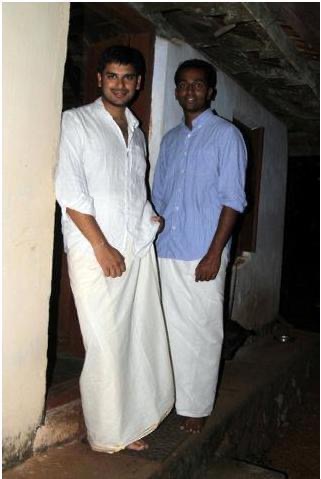
Late last year, two young men decided to live a month of their lives on the income of an average poor Indian. One of them, Tushar, the son of a police officer in Haryana, studied at the University of Pennsylvania and worked for three years as an investment banker in the US and Singapore. The other, Matt, migrated as a teenager to the States with his parents, and studied in MIT. Both decided at different points to return to India, joined the UID Project in Bengaluru, came to share a flat, and became close friends.
The idea suddenly struck them one day. Both had returned to India in the vague hope that they could be of use to their country. But they knew the people of this land so little. Tushar suggested one evening — “Let us try to understand an ‘average Indian’, by living on an ‘average income’.” His friend Matt was immediately captured by the idea. They began a journey which would change them forever.
To begin with, what was the average income of an Indian? They calculated that India’s Mean National Income was Rs. 4,500 a month, or Rs. 150 a day. Globally people spend about a third of their incomes on rent. Excluding rent, they decided to spend Rs. 100 each a day. They realised that this did not make them poor, only average. Seventy-five per cent Indians live on less than this average.
The young men moved into the tiny apartment of their domestic help, much to her bemusement. What changed for them was that they spent a large part of their day planning and organising their food. Eating out was out of the question; even dhabas were too expensive. Milk and yoghurt were expensive and therefore used sparingly, meat was out of bounds, as were processed food like bread. No ghee or butter, only a little refined oil. Both are passionate cooks with healthy appetites. They found soy nuggets a wonder food — affordable and high on proteins, and worked on many recipes. Parle G biscuits again were cheap: 25 paise for 27 calories! They innovated a dessert of fried banana on biscuits. It was their treat each day.
Restricted life
Living on Rs.100 made the circle of their life much smaller. They found that they could not afford to travel by bus more than five km in a day. If they needed to go further, they could only walk. They could afford electricity only five or six hours a day, therefore sparingly used lights and fans. They needed also to charge their mobiles and computers. One Lifebuoy soap cut into two. They passed by shops, gazing at things they could not buy. They could not afford the movies, and hoped they would not fall ill.
However, the bigger challenge remained. Could they live on Rs. 32, the official poverty line, which had become controversial after India’s Planning Commission informed the Supreme Court that this was the poverty line for cities (for villages it was even lower, at Rs. 26 per person per day)?
Harrowing experience
For this, they decided to go to Matt’s ancestral village Karucachal in Kerala, and live on Rs. 26. They ate parboiled rice, a tuber and banana and drank black tea: a balanced diet was impossible on the Rs. 18 a day which their briefly adopted ‘poverty’ permitted. They found themselves thinking of food the whole day. They walked long distances, and saved money even on soap to wash their clothes. They could not afford communication, by mobile and internet. It would have been a disaster if they fell ill. For the two 26-year-olds, the experience of ‘official poverty’ was harrowing.
Yet, when their experiment ended with Deepavali, they wrote to their friends: “Wish we could tell you that we are happy to have our ‘normal’ lives back. Wish we could say that our sumptuous celebratory feast two nights ago was as satisfying as we had been hoping for throughout our experiment. It probably was one of the best meals we’ve ever had, packed with massive amounts of love from our hosts. However, each bite was a sad reminder of the harsh reality that there are 400 million people in our country for whom such a meal will remain a dream for quite some time. That we can move on to our comfortable life, but they remain in the battlefield of survival — a life of tough choices and tall constraints. A life where freedom means little and hunger is plenty…
Plenty of questions
It disturbs us to spend money on most of the things that we now consider excesses. Do we really need that hair product or that branded cologne? Is dining out at expensive restaurants necessary for a happy weekend? At a larger level, do we deserve all the riches we have around us? Is it just plain luck that we were born into circumstances that allowed us to build a life of comfort? What makes the other half any less deserving of many of these material possessions, (which many of us consider essential) or, more importantly, tools for self-development (education) or self-preservation (healthcare)?
We don’t know the answers to these questions. But we do know the feeling of guilt that is with us now. Guilt that is compounded by the love and generosity we got from people who live on the other side, despite their tough lives. We may have treated them as strangers all our lives, but they surely didn’t treat us as that way…”
So what did these two friends learn from their brief encounter with poverty? That hunger can make you angry. That a food law which guarantees adequate nutrition to all is essential. That poverty does not allow you to realise even modest dreams. And above all — in Matt’s words — that empathy is essential for democracy.
Posted inUncategorized|Comments Off on Lesson of life…
Pour info …ce n’est pas de moi mais je trouve ce texte très bien écrit. L’auteur ne m’est pas connu …..
Être Belge, C’est un doux surréalisme, aux saveurs de croquettes aux crevettes, de moules-frites, de gauff’ de Liège en dégustant le meilleur chocolat et les meilleures bières au monde. Et pétiller au chant d’Éole en compagnie de Ruffus..
Être Belge, C’est se sentir Magritte en costume de Tintin ou de Spirou. Contempler Rubens, Van Dijk ou Brueghel sur un air de Sax(o). Entrer dans une gare de Delvaux en compagnie du chat de Geluck, de la mouette de Lagaffe ou des schtroumpfs. Contempler la taille du Manneken et compter les boules de l’Atomium en lisant Van Cauwelaert, Nothomb ou Yourcenar. C’est se rappeler que Tintin a été le premier à marcher sur la lune… et frimousser en pensant à Dirk Frimout, notre astronaute, exemplaire vivant du professeur Tournesol.
Être Belge, c’est piloter comme Ickx, cycler comme Merckx, voltiger comme Joël Robert. C’est un smash de Hénin, une volée de Clijsters ou un ace de Goffin. C’est aussi Eden Hazard. C’est chanter Brel, Adamo, les Wallace Collection ou le Grand Jojo avec un chapeau d’Elvis Pompilio sur la tête d’Annie Cordy. C’est fredonner Stromae, Maurane, Lara Fabian, Selah Sue, Alice on the Roof, Plastic Bertrand ou Axelle Red.
Être Belge, C’est Poelvoorder avec Arno, Bernard Yerlès, Patrick Ridremont et François Damiens, sur un air de Toots Thielemans et Django Reinhardt en sublimant Efira ou Marie Gillain et en se souvenant de Pierre Rapsat. C’est la pipe de Simenon – qui en est bien une – et le génie jeudemotesque de De Groodt, digne fils spirituel de Devos. C’est s’appeler De France quand on se prénomme Cécile et c’est philosopher comme JCVD.
Être Belge, C’est discuter cinéma avec les frères Dardenne et Van Dormael dans une maison de Horta où a habité Simenon. C’est avoir conscience de la réalisation de Solvay et de l’œuvre de Rops. Et ne pas oublier les sacrifices du Père Damien et de Mère Thérésa…
Être Belge enfin, c’est être fier de soi et de son pays.